Cardiac Catheterization
What Is a Cardiac Catheterization?
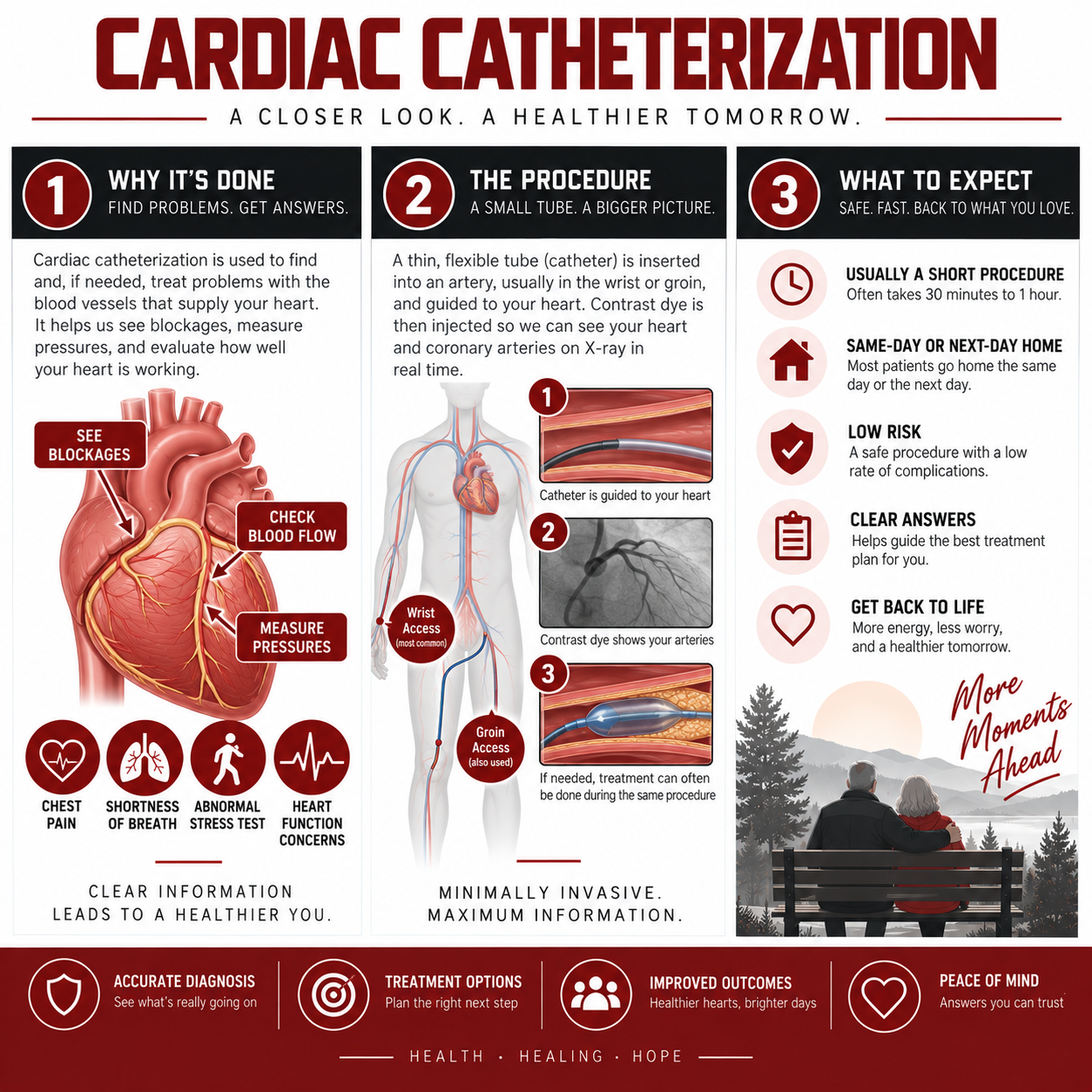
A cardiac catheterization, often called a "heart cath", is a procedure that lets us see inside your heart and the blood vessels that feed it. Think of it as giving your cardiologist a live, moving picture of your heart at work. During the procedure, we guide a thin, flexible tube called a catheter, about the width of a strand of spaghetti, through a blood vessel, usually in your wrist or groin, up to your heart. Once it's in place, we inject a special contrast dye and take X-ray images. Those images show us exactly where blood is flowing freely and where it may be slowed or blocked by plaque buildup.
Why Would I Need One?
Your doctor may recommend a heart cath if you've experienced chest pain, shortness of breath, an abnormal stress test, or symptoms of a heart attack. It's the gold standard for answering one critical question: are the arteries supplying your heart open and healthy? In many cases, a catheterization isn't just diagnostic, it's therapeutic. If we find a significant blockage, we can often treat it during the same procedure by opening the artery with a small balloon (angioplasty) and placing a stent, a tiny mesh scaffold that holds the artery open. That means one procedure can both find the problem and fix it.
What Should I Expect?
Here's the good news: a heart cath is not open-heart surgery. There's no large incision and no lengthy hospital stay. Most patients receive a mild sedative and local numbing medicine, you'll be relaxed but awake, and many patients are surprised at how comfortable they feel. The procedure itself typically takes 30 to 60 minutes. Afterward, you'll rest in our recovery area for a few hours while we monitor the small access site. Most diagnostic caths are same-day procedures, and many patients are back to light activity within a day or two.
Is It Safe?
Cardiac catheterization is one of the most commonly performed heart procedures in the United States, and serious complications are rare. As with any medical procedure, we'll review your individual risks and answer every question before we begin.