Stent Placement
What Is a Stent?
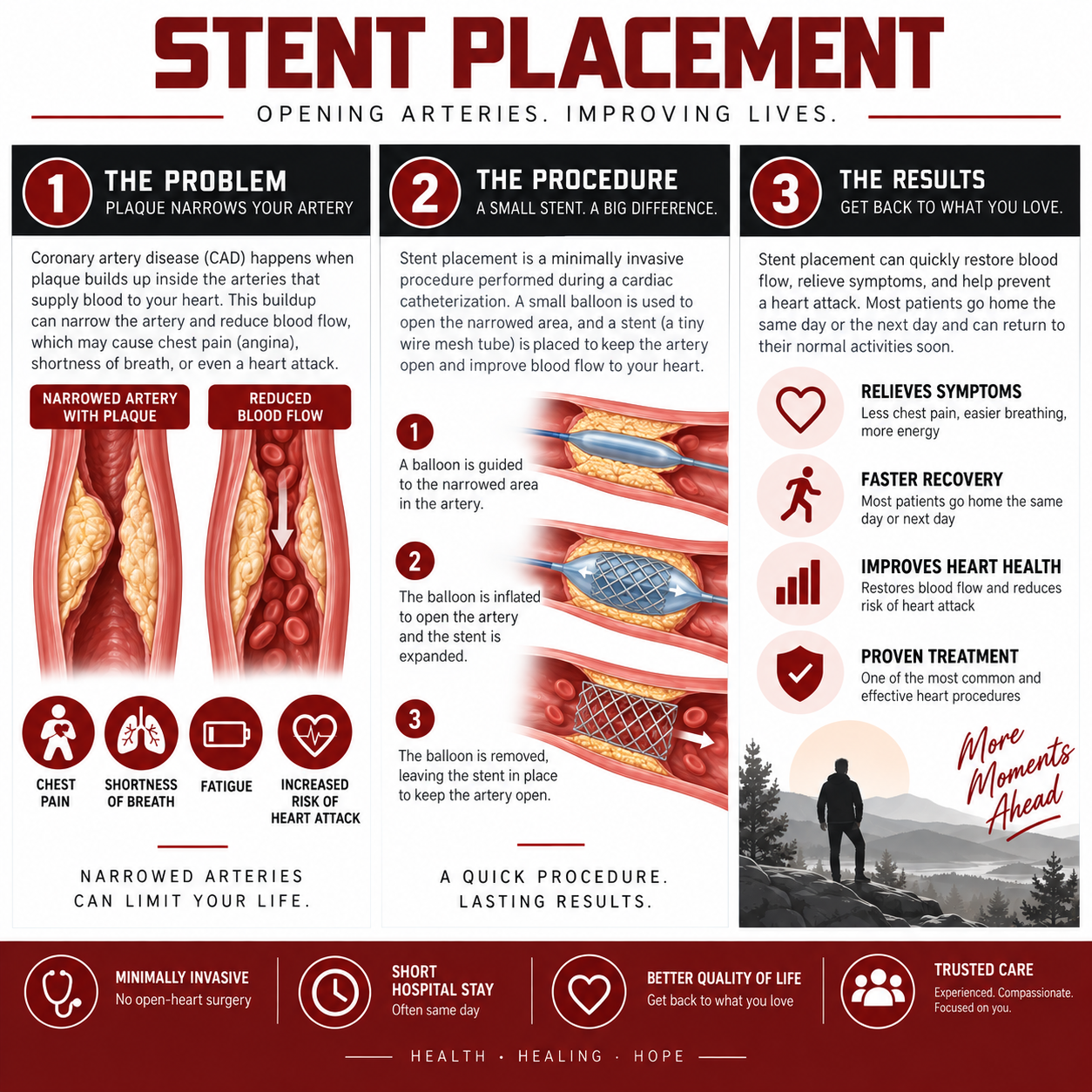
A stent is a tiny tube of metal mesh, about the size of a spring inside a ballpoint pen. Its job is straightforward: to hold a narrowed or blocked artery open so blood can flow freely to your heart muscle. Your coronary arteries deliver the oxygen-rich blood your heart needs to beat. When plaque, a waxy buildup of cholesterol and other substances, narrows those arteries, your heart is starved of blood. That can cause chest pain, shortness of breath, fatigue, or a heart attack. A stent restores the open channel and keeps it open, day and night, for years to come. Most stents we place today are drug-eluting stents, meaning they are coated with a slow-release medication that helps prevent scar tissue from re-narrowing the artery. It's one of the most elegant marriages of engineering and medicine I've witnessed in my career.
How Is a Stent Placed?
Stent placement happens during a procedure called angioplasty, in our cardiac catheterization lab, no open-heart surgery required. Through a small puncture in your wrist or groin, we guide a thin, flexible tube called a catheter up to your heart. Using X-ray guidance, we position a tiny balloon, with the collapsed stent wrapped around it, precisely at the blockage. When we inflate the balloon, two things happen at once: the plaque is pressed against the artery walls, and the stent expands and locks into place. We then deflate and remove the balloon. The stent stays behind permanently, becoming part of the artery wall itself over time.
What Should I Expect?
Most patients are awake but comfortably relaxed, with numbing medicine at the access site. The procedure usually takes under an hour. Many patients go home the same day or after one night, and return to normal activities within a week. You won't feel the stent, patients often ask, and the answer is no, you'll never know it's there. Afterward, you'll take medications, including blood thinners, to protect your stent while the artery heals around it. Taking these exactly as prescribed is one of the most important things you can do for your heart.