Transcatheter aortic valve replacement (TAVR)
Why Would a Valve Need Replacing?
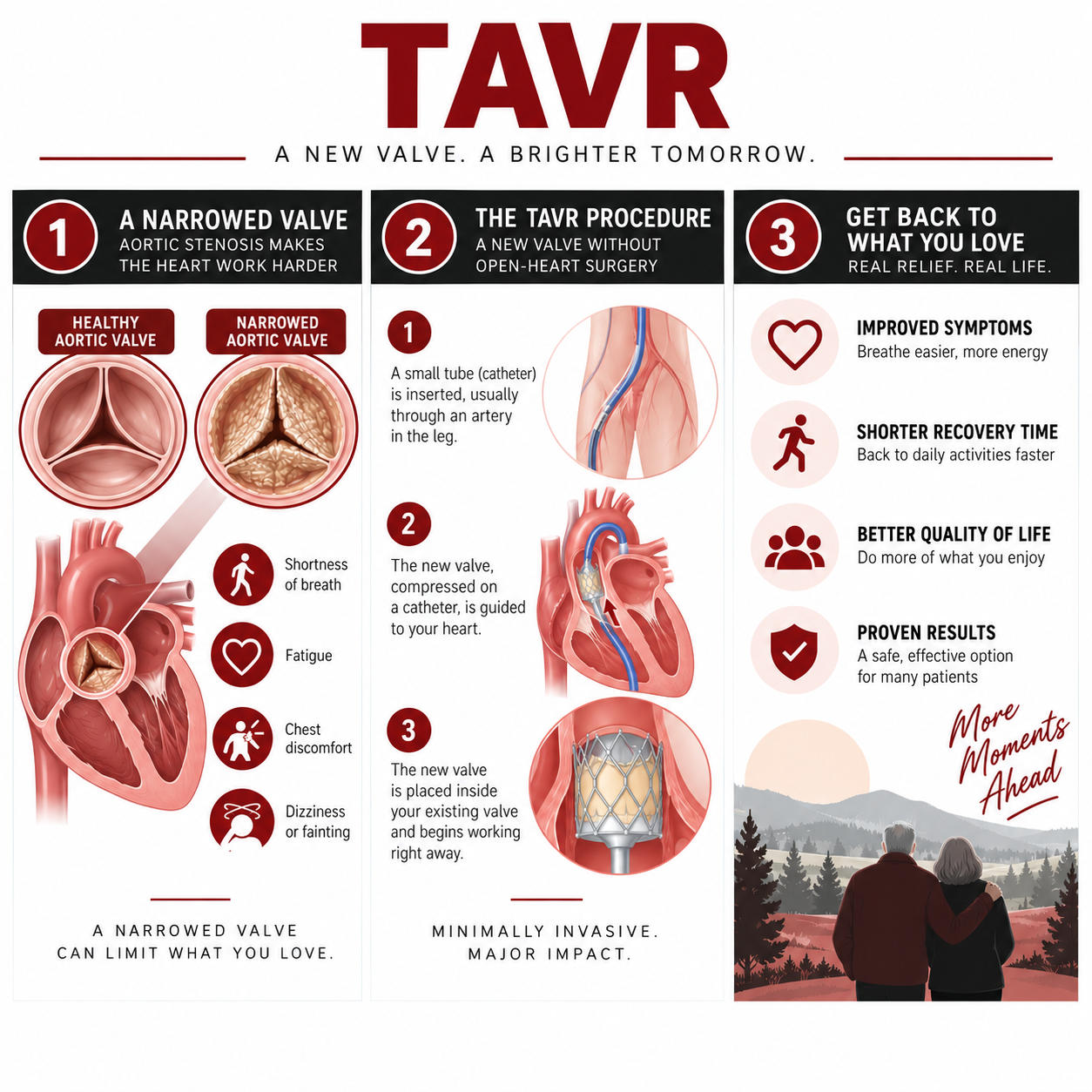
Your aortic valve is the heart's main outflow door. Every time your heart beats, that valve swings open to let oxygen-rich blood surge out to your body, then snaps shut to keep it from leaking back. With age, the valve's flexible leaflets can stiffen and calcify, a condition called aortic stenosis. The door that should open wide now barely cracks. Your heart strains against it with every single beat, and your body gets less blood than it needs. Patients feel short of breath, exhausted, dizzy, or faint; some have chest pressure. Left untreated, severe aortic stenosis is life-threatening, but here's the hopeful part: replacing the valve fixes the problem at its source.
What Makes TAVR Different?
For decades, the only fix was open-heart surgery: opening the chest, stopping the heart, and sewing in a new valve. It works well, but it's a major operation with a long recovery, and many older patients simply couldn't withstand it. TAVR changed everything. Instead of opening the chest, we deliver the new valve through a catheter, a thin, flexible tube, inserted through a small puncture, usually in the artery at the top of the leg. The replacement valve, made of durable natural tissue mounted on a metal frame, is folded down to the width of a pencil for the journey. Guided by advanced imaging, we position the folded valve precisely inside your old, diseased valve. Then we expand it. The new valve pushes the old leaflets aside, anchors itself in place, and begins working with the very next heartbeat. The heart never stops. The chest is never opened.
What Should I Expect?
The procedure itself typically takes about an hour. Most patients receive sedation rather than full anesthesia, and many are up and walking the same evening. A typical hospital stay is just one night, compare that to a week or more after open surgery.
Is TAVR Right for Me?
TAVR was first approved for patients too high-risk for surgery. Today, after years of excellent outcomes, it's an option for many patients across all risk levels. Every case is evaluated by a heart team, interventional cardiologists and cardiac surgeons together, using detailed imaging of your valve and arteries to recommend the safest path for you.