Peripheral Artery Disease Treatment (PAD)
What Is Peripheral Artery Disease?
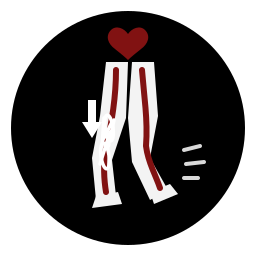
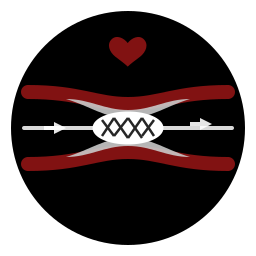
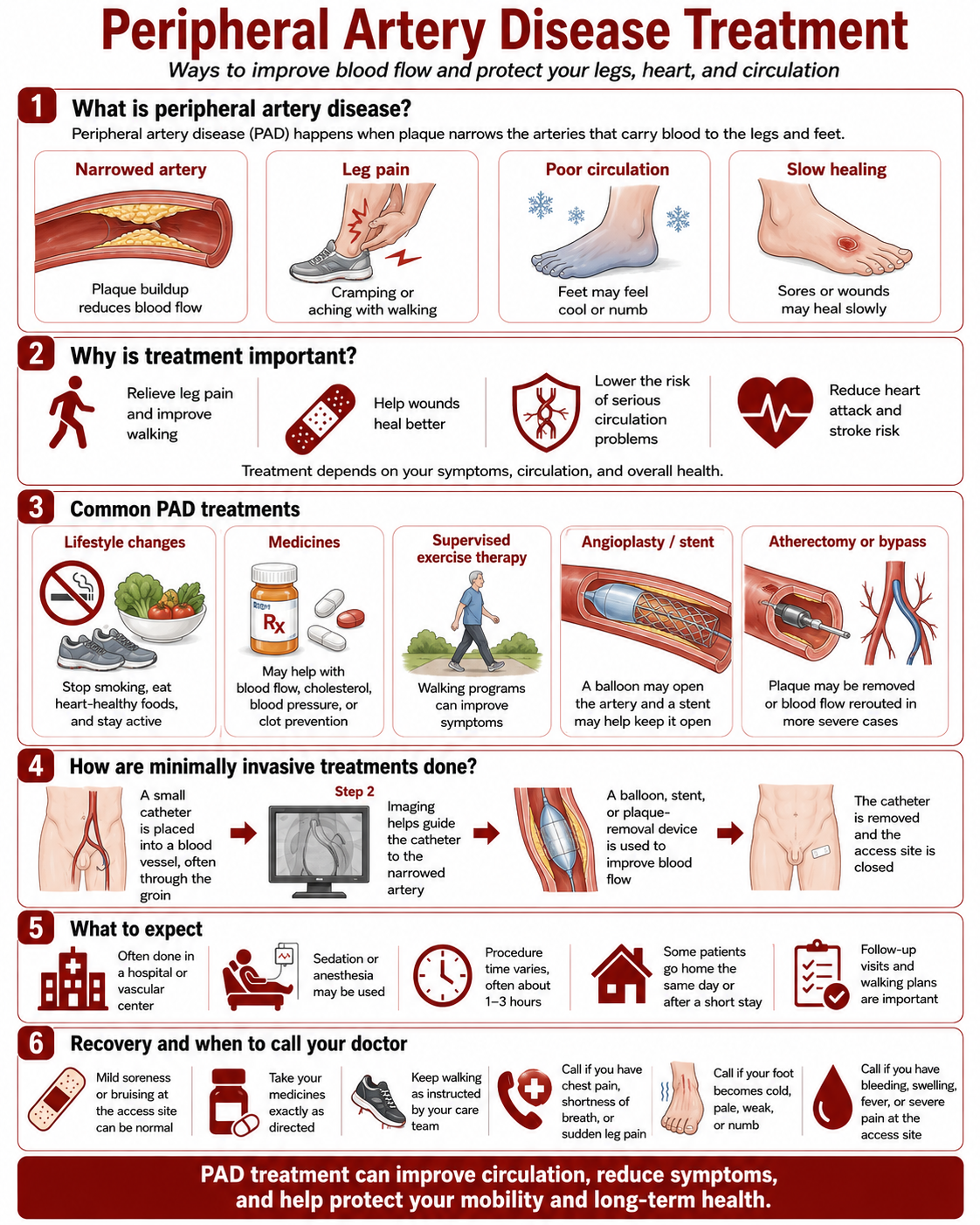
PAD occurs when plaque builds up in the arteries that carry blood to your limbs, most commonly the legs. As those arteries narrow, the muscles downstream don't get the blood they need — especially during activity. The classic symptom is claudication: cramping, aching, or heaviness in the calves, thighs, or hips that appears when you walk and eases when you rest. Other warning signs include feet that are cold or numb, wounds on the feet or toes that heal slowly, and skin changes on the lower legs. Many patients dismiss these as "just getting older." They're not. They're your arteries asking for help. PAD also carries a bigger message: if plaque is building in your legs, it's very likely building in your heart and brain, too. Treating PAD protects far more than your ability to walk.
Step One: Lifestyle and Supervised Exercise
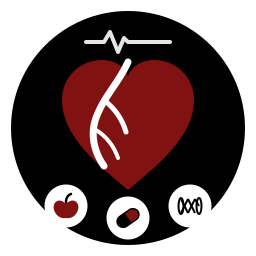
The single most powerful prescription I write for PAD isn't a pill — it's walking. A structured, supervised exercise program, where patients walk to the point of discomfort, rest, and walk again, actually encourages the body to improve blood flow to the legs. Done consistently, it can dramatically increase how far patients can walk without pain. Equally important: if you smoke, quitting is non-negotiable. Tobacco is the single greatest accelerant of PAD I've seen in my career. Add a heart-healthy diet and careful management of diabetes, and you've built the foundation of treatment.
Step Two: Medications
Medications protect both your legs and your life. Statins slow plaque buildup throughout the body. Antiplatelet medicines such as aspirin reduce the risk of dangerous clots. Blood pressure and diabetes medications protect the vessels themselves, and specific medications can improve walking distance in some patients. Taken faithfully, these medicines significantly lower the risk of heart attack and stroke — the greatest dangers PAD patients face.
Step Three: Restoring Blood Flow
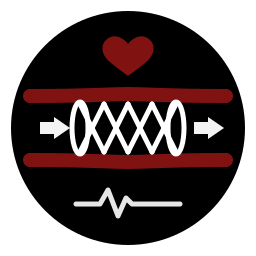
When symptoms limit your life or a blockage threatens the limb, we intervene. Using the same minimally invasive techniques we use in the heart, we thread a thin catheter through a small puncture, open the narrowed leg artery with a balloon, and often place a stent to hold it open. For long or complex blockages, surgical bypass creates a new route around the diseased segment. Most catheter-based procedures allow patients to go home the same day or the next morning.